When 'I'm Just Busy' Is Carrying More Than You Think
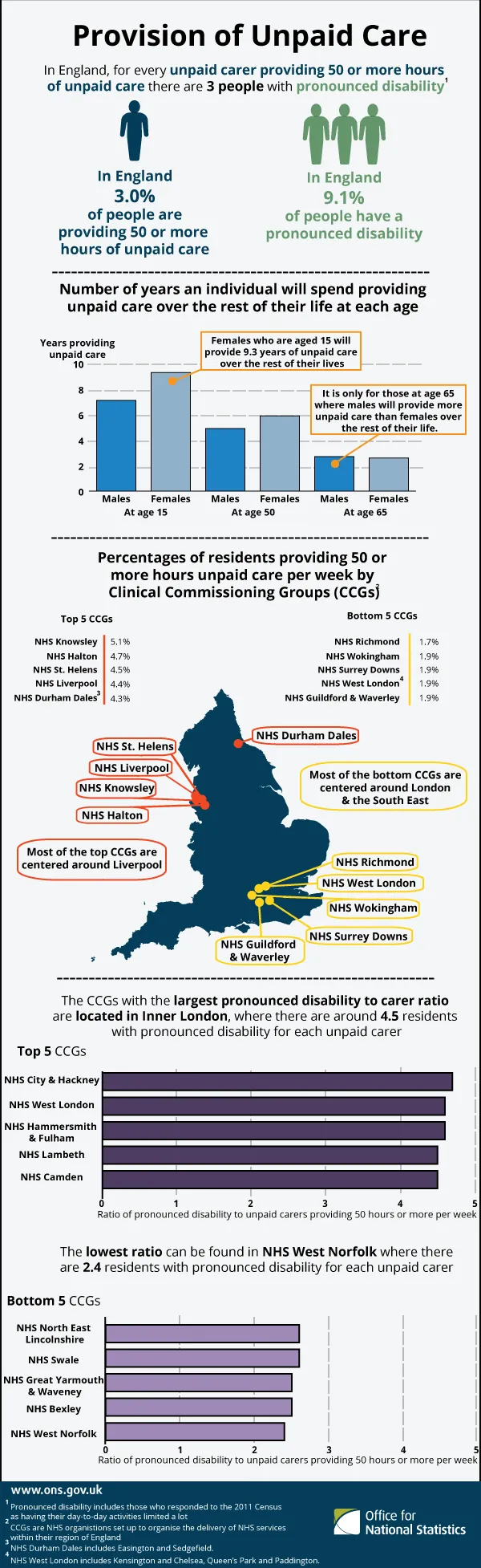
Photo: Office for National Statistics, OGL v1.0, via Wikimedia Commons
How are you? Busy. It is the answer we give when we do not have the energy to explain. For unpaid carers, it is also true. There are appointments to arrange, prescriptions to collect, forms to chase, school runs to coordinate, hospital trips to sit through and a hundred small tasks that keep someone else's life running. Busy is not a lie.
But busy can become a hiding place. It can stand in for exhausted, frightened, resentful, grieving or barely coping. And when you are caring for someone else, it can be very hard to notice that the load has moved from demanding to damaging.
In the UK, millions of people look after a family member or friend because of illness, disability, mental health or addiction. Many are in the sandwich generation, pulled between children and ageing parents. The work is often framed as practical, and practical work is still work. Burnout does not check whether you love the person you are caring for. Love and burnout can exist in the same house.
Why busy is an easy disguise
Caring roles are not always recognised. If you help someone with daily tasks because of a health condition, you may be a carer without ever using the word. You might see yourself as a daughter, son, partner, parent or friend doing what anyone would do. That framing can be kind, but it can also make it harder to ask for support.
Busy also sounds socially acceptable. People understand busy. They praise it. They do not always know what to do with the sentence underneath it: I am running on empty and I do not know how to stop.
The red flags that do not look like red flags
Cancelled GP appointments
You would not let the person you care for miss an appointment. You would rearrange your day, chase the letter and sit in the waiting room for an hour. But your own smear test, dentist appointment or medication review? Those are the ones that get moved first.
When your health is repeatedly the thing that gives way, that is not good time management. It is a sign that self-care has become optional. It is also worth noticing if you are telling yourself you will deal with it when things settle down. Caring rarely settles down without a plan.
Secret relief when plans fall through
A friend cancels dinner and you feel relief rather than disappointment. You love them. You are not a bad friend. But social time has become another thing to organise, another performance to put on, another place where you have to be fine.
That relief can be a useful clue. It does not mean you should cancel everyone. It means your reserves are low enough that even good things feel like extra work. If every cancelled plan feels like a small holiday, your nervous system is asking for space.
Money fog
Bills, receipts, benefits forms, care fees, lasting power of attorney paperwork. The pile grows. You open an envelope, look at it and close it again. You miss a payment, forget a receipt or feel a wave of dread when the post arrives.
Money fog is not laziness. It is what cognitive overload and financial stress can look like when your brain is already full of someone else's needs. If admin that used to be manageable now feels impossible, take it seriously. It is a red flag worth naming, not a character flaw.
Irritability at home
You snap at your partner. You are short with your children. You feel a flash of anger at the person you care for, then a wave of shame. Irritability is often the visible edge of exhaustion, and home is where the mask slips.
It does not mean you are a bad carer. It means your body is running on empty and has stopped filtering. If you are spending all day being patient, competent and kind, there may be very little left for the people who see you at your most tired.
Questions to ask yourself
You do not need to answer these perfectly. You just need to be honest with yourself for a minute.
- If a friend described my week to me, what would I say to them?
- When did I last have two hours that were not on call?
- Have I cancelled or postponed my own health appointment more than once?
- Do I feel relief when plans fall through?
- Is my irritability mostly at home?
- What support have I ruled out because someone else has it harder?
- What one task could someone else do this week?
Workplace support worth knowing
If you are balancing paid work with caring, there is support you may not have explored. In England, Scotland and Wales, the Carer's Leave Act 2024 gives eligible employees up to five days of unpaid carer's leave per year from their first day of employment. It is not a silver bullet, but it is a legal right and a starting point for conversation.
You can also ask about flexible working, a workplace carers policy or a carers passport if your employer has one. An employee assistance programme may offer confidential advice, and some employers offer unpaid leave, adjusted hours or temporary flexibility. If you feel safe doing so, tell your manager what you are carrying. You do not have to give every detail. You can say that you have caring responsibilities and want to talk about what support is possible.
Outside work, your local council can carry out a carer's assessment, which may open up practical help or respite. Carers UK and Carers Trust offer information and helplines. Your GP is also a sensible place to start if you are exhausted, anxious or struggling to cope. This is not legal advice, but it is a reminder that you are allowed to ask what is available.
Start by naming the load
If you are not sure where to begin, try a short sentence. To your employer: I have caring responsibilities outside work. I am not asking for special treatment, but I would like to talk about flexibility. To yourself: I am a carer. That is not a weakness.
Then make a care map. Write down the tasks you do in a normal week. Mark the ones only you can do and the ones someone else could do, even if not perfectly. Pick one to hand over or share. It might be a prescription collection, a form, a school pickup or a phone call. Small acts of sharing matter when the load has been invisible for a long time.
Caring for others does not make you immune to burnout. If you recognise yourself in these red flags, please do not wait for a collapse to prove you need support. Talk to your GP, a trusted friend or a carers service. The first step is not fixing everything. It is admitting that busy is carrying more than you think.