The Kindness Gap: Why You'd Raise Burnout for Them and Swallow It Yourself

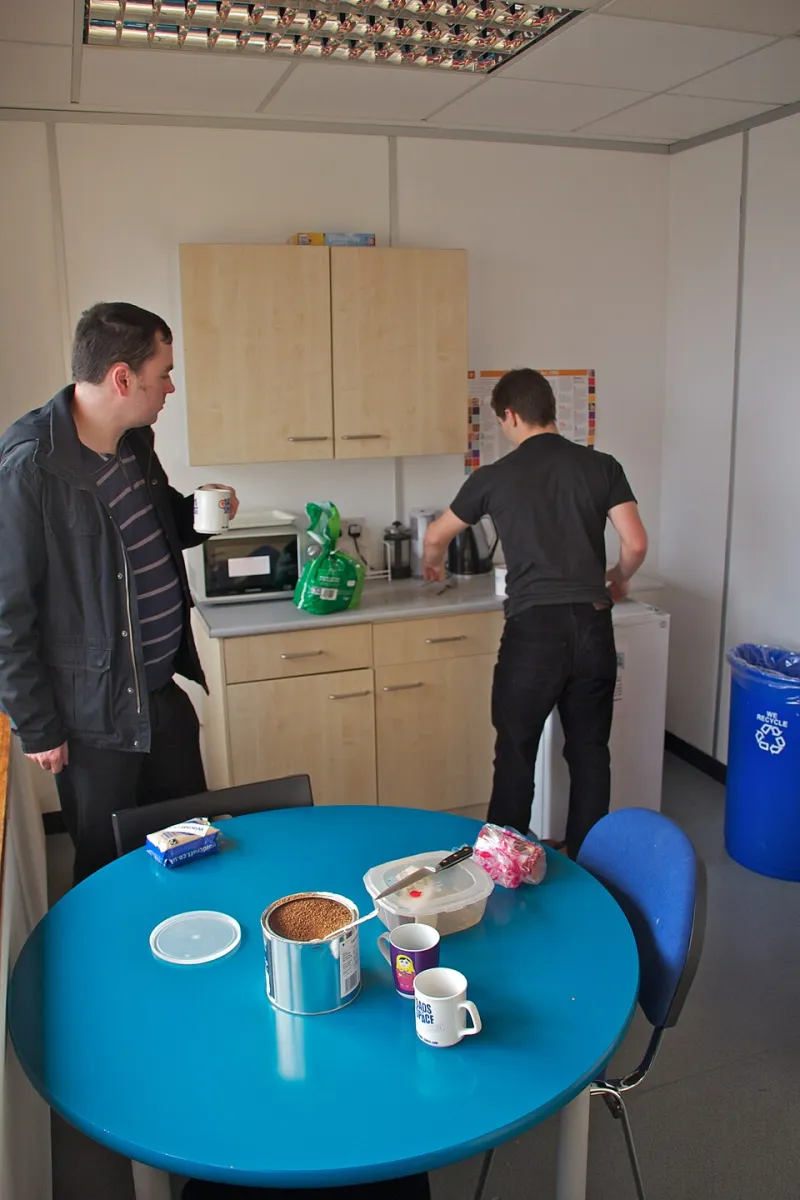
Photo: Patrick Mackie, CC BY-SA 2.0, via Wikimedia Commons
Picture the scene. It's Monday morning, and a colleague has skipped lunch for the third day running. They're sending emails at 7:12am, saying 'honestly, I'm fine' a beat too quickly, and laughing slightly too hard at a joke nobody made. You'd notice. You'd probably say something. Maybe not a formal intervention — just a quiet 'you alright?' by the printer.
Now picture the same week, except it's you. The skipped lunch becomes 'I was busy'. The 7:12am emails become 'I just woke up early'. The rushed 'I'm fine' becomes 'well, what else am I meant to say?' Every signal that would have you reaching out to someone else gets explained away in your own head.
That's the kindness gap. And it's not a character flaw — it's a very human bit of wiring that makes burnout harder to spot in the one person who needs to spot it most.
The one-way mirror
Psychologists sometimes call it the actor-observer bias. When we watch other people, we see their behaviour and draw conclusions: they look exhausted, they're withdrawing, they're snapping in meetings. When we watch ourselves, we see the context: the deadline, the understaffing, the childcare run, the fact that anyone would be tired with that lot on their plate.
We know our own intentions. We don't know anyone else's. So we extend understanding inwards and judgement outwards — except when it comes to burnout, it's usually the other way round. We extend concern outwards and judgement inwards.
UK workplace culture doesn't help. There's a long-standing instinct not to make a fuss, not to be the person who admits they're struggling. We're brilliant at asking 'you okay?' and terrible at answering it honestly. The result is a lot of people who can spot a red flag on someone else's desk from across the office, while ignoring the one stuck to their own forehead.
Six scenarios: would you flag it?
Read each one and ask yourself two questions. First: if a colleague did this, would I raise it? Second: if I did this, would I raise it?
1. The early emails. Someone on your team sends messages before 7:30am three days running. You'd probably think they're overloaded. But when it's you, it's just 'getting a head start'.
2. The missing lunch. A colleague works through lunch four days in a row, eating a sandwich at the keyboard. You'd notice. You might even mention it. When it's you, it's not a warning sign — it's efficiency.
3. The too-fast 'I'm fine'. A teammate says it before you've finished asking. You'd clock the speed. You'd maybe ask again later. When it's you, it feels like the only sensible answer.
4. The cancelled leave. Someone postpones annual leave twice because 'it's easier than handing over'. You'd see the risk. When it's you, you'd call it commitment.
5. The short fuse. A colleague snaps in a meeting, then over-apologises for a week. You'd recognise the strain. When it's you, you'd tell yourself you were just having a bad day.
6. The Sunday dread. Someone mentions that Saturday already feels like Sunday. You'd ask what's going on. When it's you, you'd shrug it off as normal.
Nobody's keeping score here. The point isn't to catch yourself out. It's to notice how quickly the standard changes when the person in the frame is you.
The colleague test
You don't need another self-assessment quiz. You need a way of looking at your own week through the eyes you already use for everyone else. Try this once a month.
Step one: write the facts, not the feelings. For one week, note the observable stuff. Hours worked. Breaks skipped. Messages sent outside normal hours. Sleep. How many times you said 'I'm fine' before lunch. Keep it plain. No interpretation.
Step two: swap the name. Read the notes as if they belong to someone you quite like. A colleague. A mate. Someone whose wellbeing you'd take seriously.
Step three: ask three questions. Would you be concerned? What would you say to them? What would you suggest they do next?
Step four: notice the gap. If the answers feel obvious for them but unreasonable for you, you've found the kindness gap. That's useful information, not a reason to feel guilty.
Step five: borrow one thing. You don't have to accept all the advice you'd give someone else. Just pick the smallest, least dramatic action from it. Take the lunch break. Move the 7am emails to 8am. Tell one person the truth about how you're doing.
Why this isn't about self-diagnosis
Spotting your own patterns doesn't mean labelling yourself. Burnout is a real thing with real symptoms, and a colleague test isn't a clinical tool. If you're noticing persistent changes — sleep, appetite, mood, motivation — that last more than a couple of weeks, that's worth a conversation with your GP or a trusted professional. The point of the test is simply to get you to the conversation earlier, not to replace it.
At Red Flag Wellbeing, we talk a lot about spotting the signs early. That usually means spotting them in other people. This week, try pointing the same attention inwards. Not with judgement. With the same concern you'd offer a teammate by the printer.
You'd say something to them. You'd mean it. The kindness gap closes the moment you mean it for yourself too.